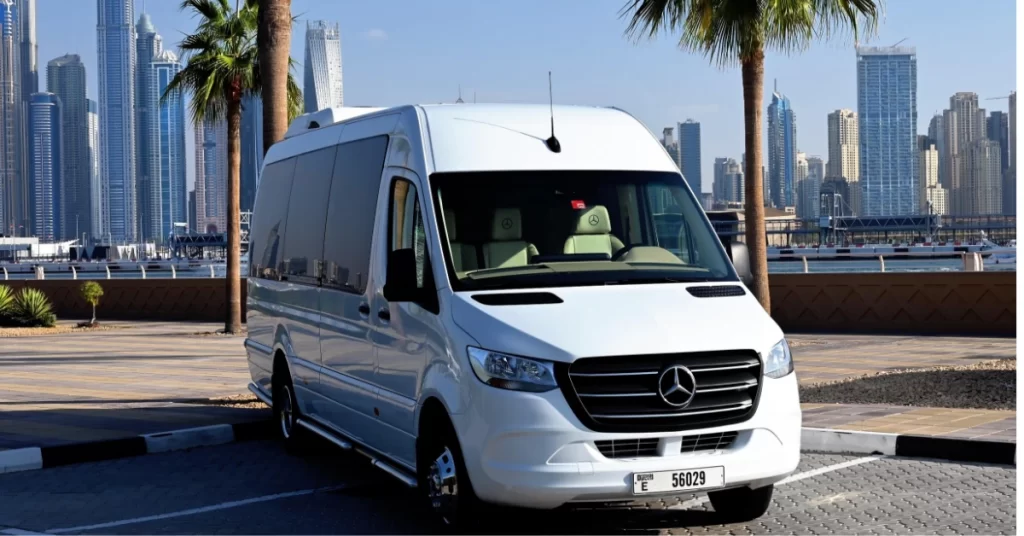
A first-time visitor books a sedan for what looks like a simple airport run, then discovers four suitcases, two carry-on bags, and a folded stroller will not fit in the trunk. A family of five ends up split across two vehicles because nobody checked seating capacity before the trip. Picking a chauffeur car in Dubai without weighing space, purpose, and passenger count often turns a smooth start to a trip into an awkward scramble at the curb.
Matching the vehicle to the trip removes that guesswork entirely. Once you know whether a ride calls for a quiet three-box sedan or a taller SUV with extra cargo room, whether it is a short hop to a downtown meeting or a five-hour drive out to Ras Al Khaimah, booking becomes straightforward rather than a gamble at the curb.
What Separates a Chauffeur Sedan from an SUV in Dubai?
A chauffeur sedan trades cabin height and cargo room for a lower stance, tighter turning radius, and better fuel economy, while an SUV trades some of that efficiency for taller seating, larger trunks, and stronger handling on rougher or longer routes.
- Cabin height and entry: Sedans sit low to the ground, so passengers step down rather than up, which suits stiff joints or formal outfits. SUVs sit higher, giving a commanding view but a bigger step for boarding.
- Trunk and cargo space: A sedan trunk holds two or three midsize suitcases before it feels tight. An SUV liftgate opens onto a deeper hold that swallows golf bags, strollers, or a week of shopping without a second trip.
- Turning radius and parking: Sedans slip into tight hotel driveways and DIFC parking bays that leave little room to spare. SUVs need a wider berth, which matters at venues with cramped drop-off lanes.
- Fuel burn per hour: Sedans sip less fuel across a full day of bookings, which shows up on longer point-to-point invoices. SUVs burn more, a fair trade when the extra room and stability matter more than the receipt.
- Seating capacity: Sedans comfortably seat three passengers with legroom to spare. SUVs stretch to five or seven, letting a family or small work team travel together instead of splitting across two bookings.
- Terrain confidence: Sedan suspension is tuned for smooth tarmac and struggles once roads turn sandy or uneven. SUV ground clearance and available All Wheel Drive handle desert tracks and mountain routes without hesitation.
- Visual impression: A sedan reads as understated and efficient, useful for low-key business calls. An SUV reads as bold and spacious, better suited to arrivals where presence matters as much as comfort.
When Does a Chauffeur Sedan Make the Most Sense for Your Dubai Trip?
A sedan fits solo executives, couples, and light travelers who want a quick, low-key ride through the city. It works best across five common situations, from airport pickups with one bag to short hops between downtown meetings.
Solo Business Travel and Executive Pickups
Executives flying in for same day meetings gain more from a sedan’s quiet cabin than an SUV’s extra room. A Mercedes E-Class or BMW 5 Series pulls up to a Business Bay tower without drawing attention, gives space to prep on a call, and clears valet lanes fast enough that a fifteen-minute buffer between appointments stays realistic. Clients who want to book premium transport Dubai wide usually start here.
Airport Runs With One or Two Bags
Solo flyers and couples carrying a carry on plus one checked case rarely need SUV trunk space. A Lexus ES350 or similar sedan swallows two midsize suitcases with room left for a laptop bag, and the lower step in and out matters after a long haul flight when climbing into a taller cabin feels like one more chore.
Short, Frequent City Hops
Meetings scattered across DIFC, Downtown, and Business Bay favor a car that threads traffic and parks close to the entrance. Sedans handle that stop start rhythm with less fuel burned per trip, and their tighter turning circle makes three or four pickups in one afternoon noticeably less draining on both driver and passenger.
Passengers With Limited Mobility
A lower seat height means less strain for elderly guests or anyone recovering from surgery. Stepping into a sedan asks far less of the knees and hips than climbing up into an SUV, and the smoother low center of gravity ride reduces the jostling that can make longer transfers uncomfortable for sensitive passengers.
Budget Conscious Full Day Bookings
Daily rental rates, fuel, and wear on tyres run lower for sedans, which adds up across a multi-day stay. A traveler booking a car for four or five consecutive days without heavy luggage or a large group gets the same chauffeured comfort at a noticeably gentler total cost than an SUV booking.
Which Dubai Journeys Actually Call for an SUV Chauffeur?
An SUV earns its higher price the moment a trip involves more than three passengers, heavy luggage, an inter-emirate drive, or unpaved terrain. Five situations make the extra height and cargo room worth booking over a sedan.
Family Groups and Multi-Generation Travel
A family of five plus car seats, strollers, and a week of luggage overwhelms a sedan trunk fast. A Toyota Highlander or similar SUV keeps everyone in one vehicle instead of splitting across two bookings, and the extra headroom gives kids room to fidget without disturbing grandparents seated up front. Parents planning a trip often check family chauffeur travel tips before deciding on a vehicle class.
Inter Emirate and Long Highway Drives
Trips out to destinations reachable through chauffeur service Abu Dhabi run two to four hours each way, and an SUV’s larger fuel tank, softer highway ride, and rear climate zones make that stretch feel shorter. Sedans handle the distance fine, but the added space becomes noticeably more welcome after hour two.
Heavy or Awkward Luggage Loads
Golf bags, surfboards, oversized suitcases, or a week’s worth of retail shopping rarely fit a sedan trunk without folding seats or leaving items behind. An SUV liftgate and flat load floor handle bulky items chauffeurs would otherwise have to squeeze in twice, cutting loading time at the curb noticeably.
Desert, Mountain, and Off Road Routes
Dune drives near Al Qudra, resort roads around Hatta, and gravel approaches to desert camps ask more of a vehicle than smooth tarmac ever does. SUV ground clearance and available all wheel drive keep the ride steady where a sedan’s lower suspension would scrape or lose traction on loose sand.
VIP Arrivals and Statement Entrances
A Cadillac Escalade or similar full size SUV commands more visual presence pulling up to a gala or product launch than a standard sedan. Tinted glass, a taller stance, and a wider door swing give guests a more dramatic step out, which matters when the arrival itself is part of the event.
How Do Sedans and SUVs Compare Across the Factors That Matter Most?
Beyond the obvious size difference, sedans and SUVs split cleanly across cost, safety feel, and practicality once you line the two up side by side on the details that shape a real booking decision.
- Seating and legroom: Sedans fit three passengers with plush, close cabin comfort built for one to three riders. SUVs stretch to five or seven seats across two or three rows, trading intimacy for room to spread out on longer rides.
- Cargo capacity: A sedan trunk manages two to three midsize bags in a separate, enclosed compartment. An SUV offers a deeper open hold with folding rear seats, handling strollers, sports gear, or bulk shopping without rearranging anything twice.
- Fuel efficiency: Lighter sedans, especially hybrid models, burn noticeably less fuel per kilometre. SUVs consume more due to size and weight, though hybrid SUVs narrow that gap for longer bookings.
- Ride height and stability: Sedans sit lower, giving a steadier feel through sharp turns and quick stops thanks to a lower center of gravity. SUVs sit taller for better road visibility, with modern stability systems closing most of the safety gap.
- Daily rental cost: Sedans typically run cheaper per day thanks to lower fuel use and lighter wear on tyres and brakes. SUVs cost more to operate, a fair tradeoff when space or presence outweighs the difference in price.
- Terrain versatility: Sedans stay confidently on paved city roads but lose composure on sand, gravel, or steep inclines. SUVs handle both smooth highways and rougher desert or mountain routes without needing a different vehicle for each leg.
- Best passenger fit: Sedans suit solo executives, couples, or anyone prioritizing a quiet, efficient ride. SUVs suit families, groups, or travelers carrying enough gear that splitting across two cars would cost more time than it saves.
Which Vehicle Fits Your Specific Trip Type in Dubai?
Matching the car to the occasion rather than a general preference keeps every booking efficient. Six common trip types each point clearly toward one vehicle class over the other.
- Airport transfers with one or two bags suit a sedan; four or more suitcases or a stroller call for an SUV’s larger trunk and liftgate.
- Solo business meetings favor a sedan’s quiet, discreet arrival; team travel with three or more colleagues works better in an SUV.
- Short downtown hops between DIFC and Downtown favor a sedan’s tighter turning radius and quicker parking near the entrance.
- Day trips through Sharjah driver hire routes favor an SUV’s highway comfort and larger fuel tank over long stretches.
- Family outings with children, car seats, or grandparents favor an SUV’s extra seating rows and easier loading through the liftgate.
- Desert excursions or off road resort transfers require an SUV’s ground clearance; paved city routes work fine in either vehicle.
- Gala dinners or product launches favor an SUV’s taller, bolder entrance; low key client dinners favor a sedan’s understated arrival.
What Should You Ask Yourself Before Booking a Chauffeur Car?
The right chauffeur car for any trip comes down to three questions: how many people are riding, how much luggage is coming along, and how far the journey runs. Answering those first prevents the common mistake of booking based on price alone and discovering mid trip that four bags will not fit in a sedan trunk or that three colleagues are stacked awkwardly across a back seat meant for two. Passenger count also affects comfort over time; a ride that feels fine for twenty minutes with three adults in a sedan back seat becomes cramped fast on an hour long drive, where an SUV’s wider bench and taller roofline make a real difference by the halfway point.
Luggage volume matters just as much as passenger count, and it is worth counting bags rather than guessing. Two carry on bags and a laptop case disappear into a sedan trunk without a second thought, but golf clubs, a stroller, or four checked suitcases for a family holiday push straight into SUV territory. Chauffeurs can work around tight cargo space by placing a bag on a lap or front seat, but that compromises comfort for everyone in the car, which defeats the purpose of booking a chauffeur in the first place. Mentioning bag count and any oversized items when booking lets the provider match the vehicle correctly before the car ever arrives at the pickup point.
Distance and terrain round out the decision. A fifteen minute hop between two DIFC towers rarely needs the extra size of an SUV, while a half day desert excursion or a drive out toward Ras Al Khaimah transfers benefits from higher ground clearance and a smoother ride over rougher surfaces. Special requests, such as a child seat, a rear facing seat for an infant, or extra water and chargers for a long drive, are worth confirming in advance rather than at the curb, since availability depends on how far ahead the request reaches the dispatch team.
Why Choose Pilot & Car When Deciding Between a Sedan and an SUV?
Because sedans and SUVs serve different needs, a chauffeur provider needs an actual mixed fleet, not a one size lineup, plus local expertise to recommend the right car rather than pushing whatever vehicle happens to be idle in the yard that day.
A Genuine Mix of Sedans and SUVs on One Roster
Some providers advertise variety but run mostly sedans, leaving families stuck with an SUV upcharge or a cramped fit. A fleet that actually carries both a sedan and a Toyota Highlander Hybrid side by side means the vehicle gets matched to the trip instead of the trip getting squeezed into whatever car is available that day.
Drivers Who Ask the Right Questions Before Booking
A chauffeur who asks about luggage count, passenger number, and destination before confirming a sedan avoids the awkward moment of arriving with a car too small for the trip. That upfront conversation, rather than a generic booking form, is what actually prevents mismatched vehicle bookings.
Route Knowledge That Covers Both City and Terrain
Navigating DIFC parking in a sedan and handling a sandy resort approach in an SUV require different skills. Chauffeurs familiar with both city driving and rougher inter emirate routes bring the same steady judgment whether the trip stays on Sheikh Zayed Road or heads out toward Hatta.
Vehicles Replaced on a Regular Cycle
An SUV with worn suspension handles desert tracks poorly, and a sedan with tired brakes feels rough on stop start city routes. Rotating vehicles on a set replacement cycle keeps both classes performing the way each is meant to, rather than letting older cars quietly underperform their type.
Flexibility to Swap Vehicle Class Mid-Booking
Plans change: a solo meeting can turn into a group dinner, or a light bag can become four suitcases after a shopping trip. Being able to swap from a sedan to an SUV, or the reverse, without starting the booking process over saves time when a trip shifts shape partway through the day.
Common Questions About Sedans and SUVs for Chauffeur Bookings in Dubai
A few questions come up on nearly every booking call, from luggage limits to whether a sedan can still handle a highway drive. Straight answers to the most common ones save time when deciding between the two vehicle classes.
Can a Sedan Handle a Long Highway Drive Between Emirates?
Yes, a sedan manages a two hour highway drive comfortably on paved roads. The tradeoff is less legroom and cargo space than an SUV over that same distance, so it suits one or two passengers with light bags better than a full family with luggage.
Is an SUV Necessary for a Standard Airport Transfer?
Not for most solo travelers or couples with a carry on and one checked bag. An SUV becomes worth booking once luggage climbs past three pieces, a stroller is involved, or more than three passengers are traveling together on the same transfer.
Do SUVs Cost Significantly More Than Sedans to Book?
SUVs typically run higher per booking due to fuel use and vehicle class, though the gap varies by trip length and vehicle model. For short city rides the difference stays modest; over a full day or multi day booking it becomes more noticeable.
Can You Request a Specific Sedan or SUV Model?
Most chauffeur providers let you request a class, such as a full size SUV or executive sedan, and sometimes a specific model if it is available that day. Mentioning the preference when booking rather than at pickup gives the dispatch team time to confirm it.
Conclusion
A sedan and an SUV can both get you from Dubai International Airport to a downtown hotel, but only one will feel right for the specific trip in front of you. Solo travelers, business executives, and anyone counting bags in single digits tend to walk away happier from a sedan’s quiet, efficient ride. Families, groups, and trips that veer off smooth tarmac lean the other way, toward the extra room and ground clearance an SUV provides.
Think through passenger count, luggage, and destination before locking in a booking, and the choice usually makes itself. For a fleet that carries both vehicle types and drivers who know which one fits which trip, reach out to the team at +971 50 785 2656 and describe the journey ahead; the right car for that specific ride is easier to confirm than most people expect.