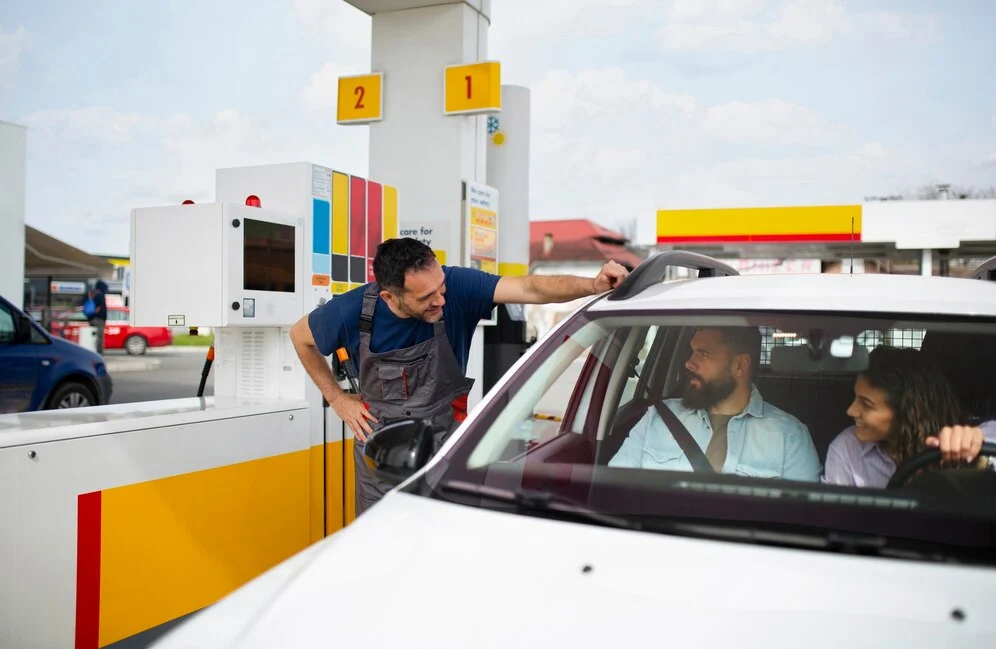
A tourist returns a rental car in Dubai a little short on fuel, expecting a small top up charge, and instead finds a refueling fee well above what the pump would have cost. Meanwhile, a different traveler pays for a full tank upfront, barely drives, and never sees a refund for the fuel left unused. Neither situation is a mistake by the rental company, just the natural result of not knowing which fuel policy applied before signing the agreement.
Understanding how the common fuel policies work, and which one suits a specific trip, turns this into a simple choice rather than a guessing game. Once the trade offs are clear, picking between full tank and prepaid fuel comes down to how much driving the trip involves.
What Is a Rental Car Fuel Policy?
A fuel policy is the rule a rental company sets for how much fuel a car should have at pickup and return, and how any difference gets billed.
Some companies expect the tank returned exactly as full as it was handed over, while others charge for a full tank upfront and let the car come back with any amount left. Neither approach includes free fuel, a detail some travelers assume incorrectly. Confirming the exact policy before driving off, rather than assuming it matches a policy from a previous trip, avoids most of the confusion that leads to an unexpected charge later.
How Does the Full Tank Policy Work?
Under a full to full policy, the car arrives with a full tank and must be returned the same way, with the renter paying only for the fuel used.
Missing that mark at return triggers a fuel charge plus, often, a separate service fee that runs well above the local pump price. Finding a petrol station near the drop off point before returning the vehicle, and keeping the receipt as proof, is the simplest way to avoid this cost entirely. This policy is the most common structure among Dubai rental companies precisely because it keeps fuel costs tied to actual usage rather than a flat prepaid amount.
Advantages of Full to Full
- Pay only for what is used: No hidden markup, since the fuel purchased at a local station covers exactly what the trip required.
- Lower refueling costs: Local petrol prices are generally cheaper than a rental company’s own refueling rate.
- A simple, transparent process: Full at pickup and full at return leaves little room for confusion about what is expected.
- No upfront fuel payment: Money stays in hand until fuel is needed, rather than being spent on a tank that might go unused.
Disadvantages of Full to Full
- Risk of a missed refill: Forgetting to top up before return triggers a fuel charge plus a service fee on top.
- Finding a station under time pressure: Locating a petrol station near an unfamiliar drop off point can add stress to an already tight schedule.
- Possible time loss: Refueling right before return can take longer than expected if stations nearby are busy.
How Does the Pay as You Go Policy Work?
Under a prepaid fuel policy, a full tank is paid for at pickup, and the car can be returned with any amount of fuel left without a refund for what remains unused.
This structure suits travelers who want to avoid stopping at a petrol station altogether before returning the vehicle, particularly when running close to a flight or a meeting. The trade off is straightforward: convenience is gained, but any leftover fuel is paid for without being reimbursed.
Advantages of Pay as You Go
- No refueling stop required: Driving straight to the return location removes one task from an already busy schedule.
- Convenience for a packed itinerary: Skipping the search for a petrol station suits travelers unfamiliar with local roads.
- No risk of a fuel penalty: Returning the car with a low tank carries no additional fine under this structure.
Disadvantages of Pay as You Go
- Paying for unused fuel: Short trips rarely use a full tank, so some of the prepaid amount goes to waste.
- Higher cost than market rates: Prepaid fuel is typically priced above what a local petrol station would charge.
- Less control over spending: Locking in a fixed fuel cost removes the option to shop around for a cheaper fill up.
Which Fuel Policy Fits Which Type of Trip?
Full to full suits longer drives and flexible schedules, while prepaid fuel suits short rentals and tight timelines where a refueling stop is inconvenient.
- Long distance or inter emirate travel: Full to full works well here, since higher fuel use makes paying only for what is consumed the better deal.
- A flexible return schedule: Travelers with time to spare can refuel calmly near the drop off point without added pressure.
- A tight schedule before a flight: Prepaid fuel removes the need to find a station when time is short.
- Unfamiliarity with local roads: Visitors unsure where petrol stations are located may prefer paying upfront to avoid searching under pressure.
- A short rental with minimal driving: Full to full still tends to save money here, since little fuel gets used either way.
What Other Fuel Policies Might a Rental Company Offer?
Full to empty, partial fuel matching, and electric vehicle charging requirements appear less often but are worth confirming before booking a specific car.
Full to Empty
A full tank is paid for at pickup with no obligation to refuel before return, similar in structure to prepaid fuel but framed around using as much of the tank as possible. In practice, using an exact full tank is difficult, so some prepaid fuel typically goes unused without a refund.
Partial Fuel Matching
Some companies hand over a car with a partial tank and expect it returned at roughly the same level. Photographing the fuel gauge at pickup helps avoid a dispute over whether the return level matched what was originally given.
Electric and Hybrid Vehicles
Electric rentals may require a minimum battery charge at return instead of a full tank, and charging stations remain less widespread across Dubai than petrol stations. Hybrid vehicles typically follow the same full to full or prepaid structure as conventional cars, so confirming which applies avoids confusion at drop off.
How Can Travelers Refuel Easily in Dubai?
Major stations such as ENOC, ADNOC, and Emarat are common across the city, and a few habits make refueling straightforward regardless of which policy applies.
- Use a navigation app to locate the nearest station rather than searching while already close to the return deadline.
- Refuel a few kilometers before the drop-off point rather than waiting until the last possible stretch.
- Confirm the correct fuel type, since using the wrong one can cause serious and costly engine damage.
- Keep the fuel receipt as proof in case the rental company requests it at return.
What Mistakes Do Travelers Make With Fuel Policies?
Misunderstanding which policy applies, forgetting to refuel, and paying for far more fuel than a trip needs account for most fuel related complaints.
- Assuming full to full when it is prepaid: Confirming the exact policy at pickup, rather than guessing, avoids paying twice for the same tank.
- Forgetting the refill before return: This is the single most common way a small trip ends with an unexpectedly high final bill.
- Using the wrong fuel type: Petrol and diesel are not interchangeable, and the wrong choice can lead to expensive repairs.
- Overpaying for prepaid fuel on a short trip: Calculating expected mileage before choosing prepaid fuel avoids paying for a tank that never gets used.
Why Skip the Fuel Policy Question With a Chauffeur Instead?
A chauffeur booking removes the entire fuel decision, since the vehicle, fuel, and every related cost belong to the provider rather than the passenger.
No Tank to Track at Return
There is no full tank to confirm, no receipt to keep, and no station to search for near a drop off point when a professional driver manages the vehicle throughout the trip. Visitors staying near the capital can book Abu Dhabi chauffeur hire and never think about a fuel gauge during the stay.
One Fixed Rate Covers Everything
A chauffeur rate is agreed before the trip starts, with fuel, tolls, and driving all bundled into a single price. Visitors comparing this against a self drive rental can look into RAK car with driver for a longer stay outside the city.
A Full Tank Waiting at the Airport
Arranging Abu Dhabi airport transfer in advance means arriving to a car that is already fueled and ready, with nothing to confirm at pickup beyond the booking itself.
Compare the Convenience Before Deciding
Visitors weighing a chauffeur against a rental’s fuel policy can skip the fuel policy altogether and see what a fixed rate looks like next to the rental math.
Rental Car Fuel Policies in Dubai: Questions Answered
Which fuel policy saves the most money?
Full to full usually saves more for a typical trip, since the renter pays only for fuel consumed rather than a flat prepaid amount that may go unused.
What happens if I return a full to full rental without refueling?
The rental company charges for the missing fuel plus a service fee, both typically higher than the price at a local petrol station.
Is prepaid fuel ever the better choice?
Yes, for short trips or a tight schedule before a flight, since it removes the need to find a station before returning the car.
Do electric rental cars in Dubai follow the same fuel rules?
No, electric vehicles typically require a minimum battery charge at return rather than a full tank, so confirming the specific policy before booking matters more than usual.
Can a chauffeur avoid the entire fuel policy question?
Yes, since the vehicle and fuel both belong to the provider, a chauffeur booking removes the need to track a tank level at all.
Conclusion
Choosing between full to full and prepaid fuel comes down to how much driving your trip involves, how flexible your schedule is, and whether you plan to drive a rental car to other emirates. Longer trips across Dubai, Abu Dhabi, Sharjah, or other emirates can make fuel planning more important, while short visits may make prepaid fuel more convenient. Check the rental agreement for any restrictions, fuel charges, or conditions for taking the car outside the emirate.
For travelers who would rather remove the fuel question entirely, call the team at +971 50 785 2656 and describe the trip. A chauffeur handles the fuel, route, inter-emirate travel, and everything in between.